Introduction
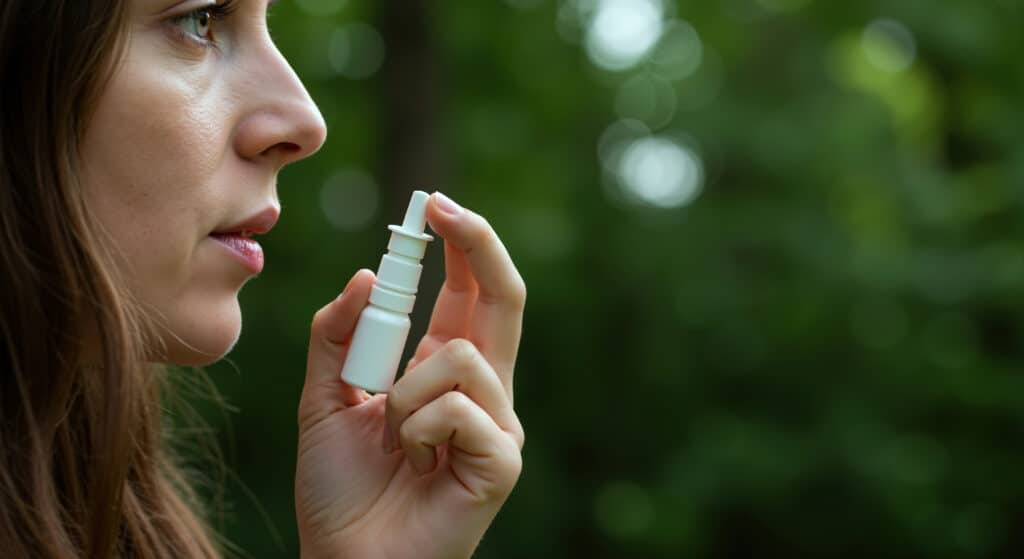
With respiratory virus season on the horizon, researchers are turning attention to a potential new tool in COVID-19 prevention. Traditionally, the cornerstones of protection have included vaccines, masking, antiviral therapy, and monoclonal antibodies, but recent findings suggest another option may be emerging. What if a nasal spray you already see on grocery store shelves could join the prevention toolkit? A recent clinical trial suggests that azelastine (also known as Astepro or Astelin), a widely used over-the-counter and prescription antihistamine nasal spray, may reduce the risk of SARS-CoV-2 infection by roughly two-thirds (Becker et al., 2024).
For us health care workers, this raises practical questions about how we counsel our patients and give our evidence-based advice. In this post, we’ll unpack the study, explore its mechanisms, highlight limitations, and I’ll share my take (no prescription pad required).
The Study at a Glance: In a phase 2, randomized, double-blind, placebo-controlled trial conducted in Germany, 450 healthy adults (mean age ~33 years, nearly all vaccinated) were randomized to use either azelastine nasal spray (0.1%) or placebo for 56 days (Becker et al., 2024; U.S. National Library of Medicine, 2024). Participants self-administered one spray per nostril three times daily; in case of known exposure or symptoms, the dose could be increased to five times daily for three days.
Results:
- Infection rate:2% in the azelastine group vs 6.7% in placebo; a 69% relative risk reduction.
- Secondary findings: Fewer symptomatic COVID-19 cases and fewer rhinovirus (common cold) infections in the azelastine group (Trial MedPath, 2024).
- Safety: Adverse events were mild and comparable between groups.
And you may ask the same question as I did: how might this work?
Azelastine is a second-generation H₁ receptor antagonist approved for allergic rhinitis (FDA, 2023). However, researchers have proposed antiviral mechanisms beyond histamine blockade:
- Interference with viral binding: Azelastine may stabilize ACE2 receptors in a configuration less favorable for SARS-CoV-2 spike protein binding (Becker et al., 2024).
- Inhibition of viral proteases: Preclinical data show activity against viral replication machinery (Cacace et al., 2022).
- Anti-inflammatory effects: Reducing local nasal inflammation and ICAM-1 expression may make the mucosa less “welcoming” to viral entry (Cacace et al., 2022).
In short: azelastine might be doing more than keeping sneezes at bay, it could be acting as a molecular blockade against respiratory viruses.
Clinical Implications: Not Ready for Prime Time, But Worth Watching
While the findings are intriguing and promising, this was a single-center phase 2 trial. Larger, multicenter studies are definitely needed to confirm efficacy, define dosing, and assess durability across viral variants (NIH, 2024). It’s certainly not ready to replace vaccination, masking, or ventilation measures.
So, if a patient asks, “Hey, can I use that nasal spray to avoid COVID?” here’s a balanced approach:
- Acknowledge the data: “Yes, a small clinical trial found fewer COVID infections among people using azelastine nasal spray.”
- Emphasize uncertainty: “We don’t yet know if this works in larger or different populations.”
- Frame it as complementary: “Think of this as a possible add-on, not a replacement for vaccines or other proven measures.”
- Discuss safety: Common side effects include bitter taste or nasal irritation. Reinforce that this would be an off-label use.
- Encourage vigilance: Recommend patients to always contact their health care provider and monitor for adverse effects if they choose to try it.
Limitations and Gaps:
If proven effective, azelastine nasal spray could be especially useful for high-exposure healthcare workers, immunocompromised individuals (pending safety data), or during variant surges and travel. However, practicality remains a concern. Three sprays a day for eight weeks is no small commitment and its protection against newer variants is uncertain.
Like any promising study, this one has caveats. It was single-center with a modest sample size of 450 mostly young, healthy, vaccinated adults and only 56 days of follow-up. Variant-specific data were not assessed, the drug’s distinctive taste may have unblinded participants, and there’s no data on severe disease prevention or long-term mucosal safety. Future research should include older and immunocompromised populations, explore variant-specific effects, and compare azelastine to other prophylactic options.
My Pharmacist Take
I love when an everyday drug surprises us. A $15 nasal spray potentially offering some viral protection? That’s exciting and refreshingly accessible.
That said, I’d describe my stance as cautiously optimistic. If a patient brings it up, I wouldn’t dismiss the idea, but I also wouldn’t recommend it outright. The evidence is still early, and we don’t yet know how it performs against newer variants.
Still, this is a great reminder that old drugs can find new purposes. If future studies confirm benefit, azelastine could become a helpful sidekick in our prevention toolkit, maybe not the superhero, but definitely worth keeping on the radar.
Takeaway
- Early evidence: A phase 2 trial found azelastine nasal spray reduced SARS-CoV-2 infections by ~69% under trial conditions (Becker et al., 2024).
- Mechanism: Beyond antihistamine effects, azelastine may block viral entry and replication (Cacace et al., 2022).
- Limitations: Small, short-term study, not generalizable yet.
- Clinical use: Not standard of care; off-label and investigational.
- Counseling tip: If patients ask, educate, don’t endorse.
Want to explore more about respiratory virus prevention and COVID-19? Check out these other amazing posts on the FreeCE’s website here!.
References
Becker, S., Windisch, W., Meister, M., Holz, O., Hohlfeld, J. M., Krug, N., … & Greulich, T. (2024). Azelastine nasal spray for prevention of SARS-CoV-2 infection: A randomized clinical trial. JAMA Internal Medicine. Advance online publication. https://doi.org/10.1001/jamainternmed.2024.3957
NBC News. (2024, October 3). COVID infection may be prevented by common nasal antihistamine spray, trial suggests. NBC News. https://www.nbcnews.com/health/health-news/covid-infection-may-prevented-common-nasal-antihistamine-spray-trial-s-rcna228500
U.S. National Library of Medicine. (2024). Azelastine nasal spray for prevention of SARS-CoV-2 infection (ClinicalTrials.gov Identifier: NCT05748268). ClinicalTrials.gov. https://clinicaltrials.gov/study/NCT05748268
Cacace, E., Barresi, V., & Barresi, G. (2022). Antihistamines as potential antiviral drugs: From influenza to COVID-19. European Journal of Pharmacology, 918, 174715. https://doi.org/10.1016/j.ejphar.2022.174715
Food and Drug Administration. (2023). Azelastine nasal spray label information. U.S. Food and Drug Administration. https://www.accessdata.fda.gov/drugsatfda_docs/label/2023/020114s039lbl.pdf
Trial MedPath. (2024, October 4). Azelastine nasal spray shows promise in preventing COVID-19 infections in clinical trial. MedPath News. https://trial.medpath.com/news/66cb1885a2e0b962/azelastine-nasal-spray-shows-promise-in-preventing-covid-19-infections-in-clinical-trial
National Institutes of Health. (2024). SARS-CoV-2 infection prevention and investigational prophylactics. NIH COVID-19 Treatment Guidelines. https://www.covid19treatmentguidelines.nih.gov/