
The Impact of Financial Stress on Pharmacy Professionals

Financial stress affects 88% of Americans — and pharmacy professionals aren’t immune. When money worries follow you into the pharmacy, they can impact your focus, your patience, and the care you provide. Learn how to apply the same methodical approach you use for patient health to your own financial well-being, and start making appointments with your money today.
Navigating ANCC Board Certification Renewal: Essential Pharmacology CE Insights for Nurse Practitioners

ANCC board certification renewal requires nurse practitioners to complete advanced pharmacology continuing education and maintain accurate documentation. This guide explains common pharmacology CE mistakes, audit requirements, renewal risks, and practical strategies to stay compliant and avoid certification delays.
What Counts as Advanced Pharmacology CE for APRNs?

Advanced pharmacology continuing education is a key requirement for APRN certification renewal through ANCC and AANP. This guide explains what qualifies as pharmacology CE, how to verify accredited contact hours, and how APRNs can stay compliant while strengthening safe prescribing practices.
DSCSA Pharmacy Compliance: Track and Trace Requirements Explained

A look at how the Drug Supply Chain Security Act (DSCSA) is transforming pharmaceutical oversight in response to past safety failures, and what pharmacies must do to stay compliant with track-and-trace requirements.
Think Before Prescribing: Using the Beers Criteria in Advanced Practice

Prescribing for older adults requires more than knowledge of drug therapies — it demands careful evaluation of medication safety. The 2023 American Geriatrics Society (AGS) Beers Criteria helps APRNs identify potentially inappropriate medications in older adults who face increased risks due to physiologic changes, polypharmacy, and heightened drug sensitivity. As highlighted in a PharmCon freeCE educational activity led by Carolyn O’Brien, PhD, AGPCNP-BC, the Beers Criteria is a clinical guideline, not a mandate. It supports individualized decision-making, particularly when managing high-risk medications such as anticholinergics, benzodiazepines, certain sulfonylureas, and NSAIDs. APRNs must weigh fall risk, delirium potential, cognitive burden, and overall quality of life while considering safer alternatives and deprescribing strategies. Using Beers thoughtfully strengthens medication safety, improves geriatric outcomes, and reinforces advanced pharmacology competency in high-stakes prescribing situations.
Use of Epinephrine in Emergency Situations (Anaphylaxis): Part 2
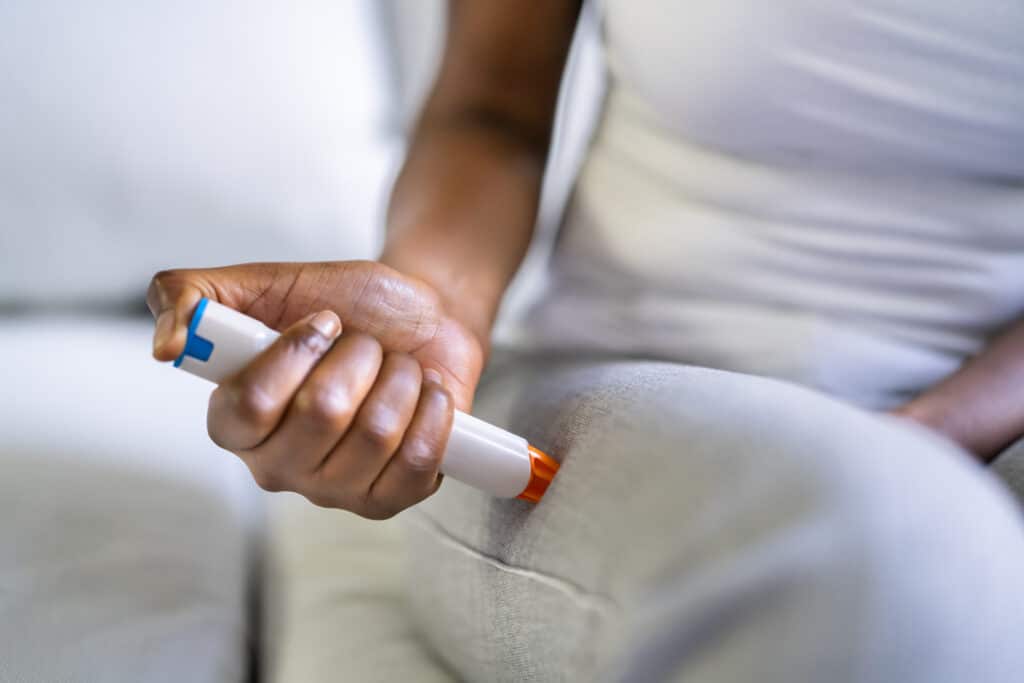
Fear, not pharmacology, is often the biggest barrier to timely epinephrine use. In Part 2, we explore how needle phobia shapes patient behavior, refill patterns, and real-world outcomes, and why intranasal epinephrine may represent a meaningful shift in anaphylaxis treatment design.
Use of Epinephrine in Emergency Situations (Anaphylaxis): Part 1

Epinephrine saves lives in anaphylaxis, yet hesitation, needle fear, and device complexity still delay use. This article explores the real-world barriers pharmacy teams see every day and why intranasal epinephrine may represent a meaningful shift in emergency care delivery.
Point-of-Care Testing Isn’t “Extra” Anymore: How Pharmacy Technicians Are Becoming Essential to POCT

Point-of-care testing is no longer an “extra” service in pharmacy. From flu and COVID testing to A1C and cholesterol checks, POCT has become part of daily workflow. And behind every successful testing program are trained pharmacy technicians. Learn how POCT is expanding technician responsibilities and why proper training makes all the difference.
Embracing AI Innovations: The Digital Clinician

A recent phase 2 clinical trial suggests that azelastine nasal spray, a common antihistamine used for allergic rhinitis, may reduce the risk of SARS CoV 2 infection. Researchers observed lower infection rates and fewer symptomatic cases among participants using the spray. Although these early findings are intriguing, larger studies are needed before azelastine can be recommended for routine COVID prevention.
Level Up Your LAI Practice: Building Confidence with Long-Acting Antipsychotics

Long-acting injectable antipsychotics can improve adherence and outcomes, but many pharmacists lack confidence navigating their complexity. This ACPE-accredited CE series led by Dr. Tammie Lee Demler equips pharmacists with the clinical knowledge, practical skills, and patient-centered strategies needed to confidently initiate, manage, and administer LAI antipsychotics in real-world practice.